Erin-Ijesa Development Association · Investment & partnership
Invest in Erin-Ijesa.Build lasting value.
Erin-Ijesa welcomes domestic and international partners interested in tourism, enterprise, agriculture, infrastructure and responsible use of local potential—working with the community from the beginning.
Opportunity should begin with a problem worth solving.
The strongest starting points are connected to activity already visible in the community: the visitor economy around Olumirin, farming and trade, local enterprise, culture, events and communication with the diaspora.
An opportunity is not the same as an investment-ready project. Demand, land rights, infrastructure, financing, environmental impact, permits and community benefit must be tested for every proposal.
The community's investment brief
Start with what EIDA says about Erin-Ijesa.
This is community-provided source material from the Erin-Ijesa Development Association. It records local knowledge, priorities and remembered economic life. Time-sensitive details should be reconfirmed before a proposal is made.
Landscape & water
Hills, forest, rivers and seasonal streams
EIDA's account places the town at the foot of the Yoruba Hills and names the Oni and Olumirin rivers alongside local streams. That landscape supports the community's ambitions for tourism, fisheries and environmental enterprise.
Farming & work
Crops, processing skills and cooperative labour
The brief describes rice, yam, maize, beans, plantain, cocoa and kolanut, together with milling, welding and other trades. It also records aaroand ebese as traditions of shared agricultural work.
Markets & enterprise
Trading networks, cooperatives and local services
Oyigbo-Mekun market and named farmer and trader groups are part of the community record. Their present activity, membership and needs are practical starting points for fresh field research and partnership design.
Read the full EIDA community-provided investment account
How to read this record
Names of former service providers, facilities, market schedules, production volumes and natural-resource claims may describe an earlier period. Confirm their current status directly with EIDA and the relevant authorities.
Investments & Trade
There are possible domestic & foreign investments in industries such as Tourism, Hotels, Restaurants, Wildlife, Parks, Renewable Energy Generation such as Hydro-Electricity, Wind-Mills on top of the mountains, Solar plants, etc; investment in the mining of feldspar-quartz and granite; as well as investment in timber log business, aside from rice plantation, cocoa plantation, etc.
You could contact us for a detailed discussion on the same.
MORE ON ENVIRONMENT FOR INVESTMENTS
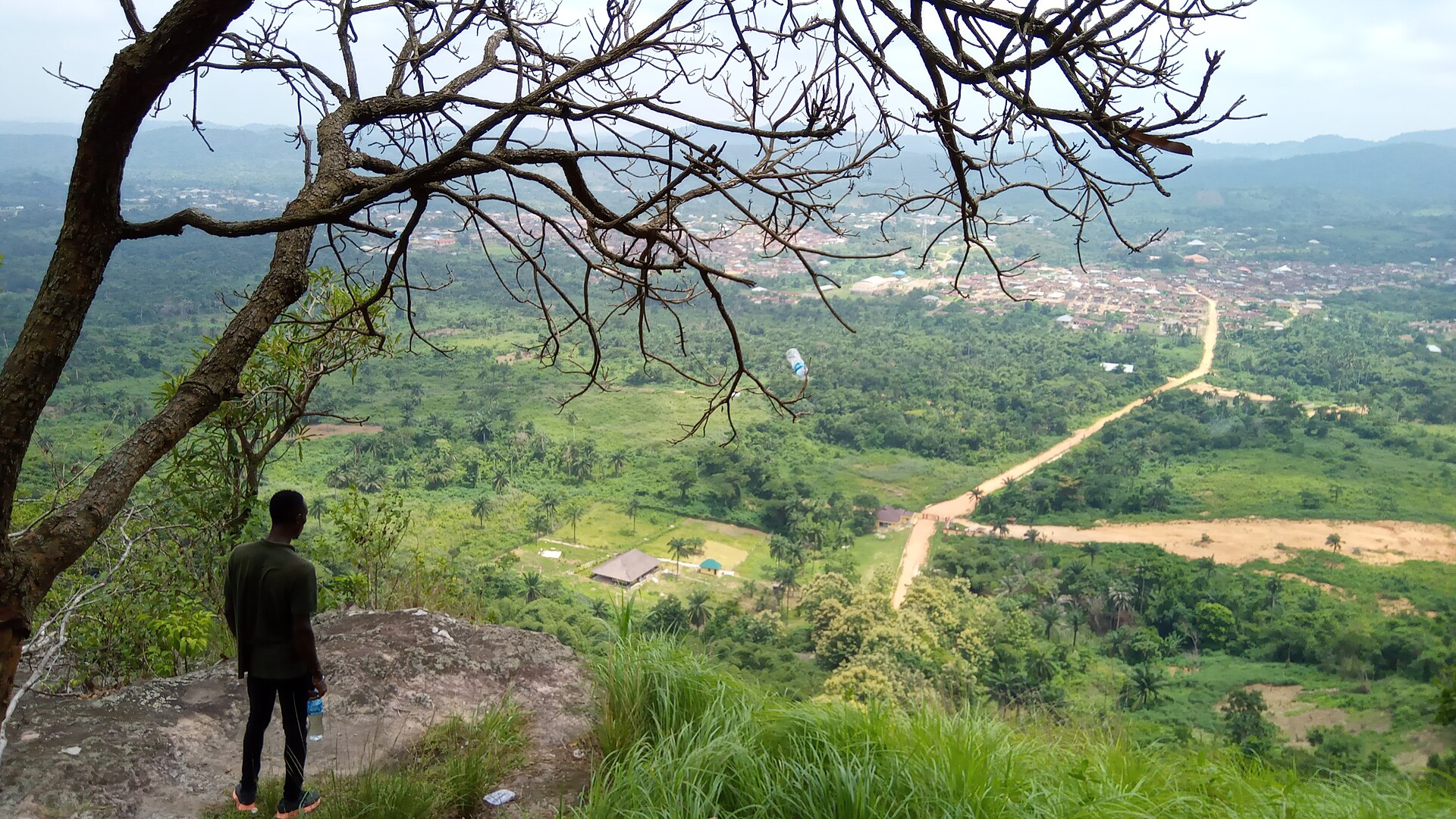
Erin-Ijesa is blessed with beautiful landscape with projecting hills within the range of 1,200 to 1,300 feet above sea level. The geographical location of Erin-Ijesa at the foot of Yoruba Hills provides attractive and beautiful scenery looking upwards to the hills, interlocked by rocks and evergreen deciduous forest. It is also interspersed by big trees like ‘Iroko’, ‘Arere’, ‘Oganwo’, etc; which of course provided opportunities for timber business and saw-milling. The area is well-drained by two major rivers, the Oni and the Olumirin. There are, in addition, several streams and brooks many of which are however seasonal. Some of these are Agbaroko, Ogburugburu, Ayinrin, Mojapa, Osun, Onisooro, Asiko, and Ajimoloko. These streams and brooks can be used for fishery ponds. A cliff is formed along the course of the Olumirin river creating a waterfall which is a major tourist attraction for many people all over Nigeria and the world in general. Olumirin waterfalls have placed Erin-Ijesa on a roadmap of development. The waterfall is one of the most important tourist centres in Osun State. The epithet of Osun State “Land of the Living Spring” is derived from the waterfalls at Erin-Ijesa and Osun River grove in Osogbo.
The main stay of the economy of the town is farming. The location is swampy and sloppy, allowing for the cultivation of varieties of crops of which rice is currently very prominent. Erin-Ijesa produces the largest tonnage of rice in Osun State. Yams, maize, beans, plantain as well as cash crops like cocoa, kolanut and timber are also produced in large quantities. Other predominant occupations are rice-milling, cassava milling, welding, local wine brewing, photography, barbing, etc. Erin people are predominantly agrarian and peaceful. They practice ‘aaro’ and ‘ebese’ (a communal and cooperative labour system) as means of assisting one anotherin their land cultivation most especially during the clearing and planting seasons. It is a feature of cohesiveness and communal unionism. In the past, the aaro system was used to offer farming assistance on the basis of brotherhood, in-law, age-grades, and in helping the weak and the sick.
The people in the community are generous and accommodating as various people in Nigeria come here to buy and sell. Erin people can be accommodating to a fault. They are are also liberal but highly principled. This was reflected in the way Christian and Islamic religions have come to be accepted by the people without much conflict. Oba Ayeni, a famous and respected herbalist within his immediate domain and beyond, during his reign led his people to accept modern faiths in spite of their deep-seated beliefs in traditional ways of worship.
There are two government owned primary schools and one government-owned secondary school aside from many private schools (nursery, primarywithin the community. There are modern amenities like electricity, pipe-borne water, telecommunication (MTN, GLO, ZAIN, ETISALAT), maternity centre, post-office, Union Bank, Police Station, shopping complex, Grade C customary court, and 20-bed hospital (awaiting commissioning). There are many place of worship like Christ Anglican Church, Christ Apostolic Church, Redeem Church, Catholic Church, Deeper Life Church, Foursquare Gospel Church, Cherubim & Seraphim, and mosque.
The major market is the Oyigbo-Mekun market, also known as Oodua market, at the centre of the town. This market formerly held every seventeen days but now held every eight days. People come from various towns of Yorubaland to buy and sell various articles such as clothes, mats, beads, etc and farm produce among others. We also have various cooperative society of farmers and traders, such as Obalagbe Farmers Association, Agbelere Farmers Association, Agbejeunseku Farmers Association, Egbe Oniresi Farmers Group, Cocoa Produce Farmers Association, etc. Even though, Erin people practiced farming intensively and extensively, a small percentage of the population engaged in trading and craftwork like mat-weaving, blacksmithing and tailoring.
Erin-Ijesa is blessed with untapped mineral resources like feldspar-quartz and granite. Feldspar is used in making glassware while granite is used in construction industry.
Opportunity areas identified by the community
Where a serious conversation can begin.
EIDA welcomes discussion in these sectors. Each proposal still needs current demand, land, technical, environmental and regulatory checks.
Visitor economy
Hospitality and visitor services
Food, lodging, guiding, transport, sanitation, trail support and locally made products may address needs around Olumirin. Any proposal should be coordinated with current public plans and community priorities.
Agriculture
Value addition, not unsupported production claims
Farming is documented locally, and a 2017 state report records outreach to rice and potato farmers in Erin-Ijesa. Current volumes must be measured before considering storage, processing, packaging or market access.
Community enterprise
Skills, small business and diaspora partnerships
Training, cooperative support, digital tools and access to markets can strengthen existing businesses when programmes are designed with local participants and clear measures of benefit.
Culture & communication
Events, heritage, media and creative work
Community events, documentary work, heritage interpretation and local products can create value while keeping cultural ownership, consent and accurate representation at the centre.
Energy & infrastructure
Study solar, wind and small-scale energy needs
The community brief identifies renewable energy as an area of interest. Resource measurement, site suitability, grid or off-grid demand and community benefit should determine which technologies merit a feasibility study.
Natural resources
Verify minerals, forestry and fishery potential
EIDA's account names feldspar, quartz, granite, timber and fish-pond possibilities. Geological, land, water and biodiversity evidence must establish what is viable and responsible before promotion or extraction.
A current public signal
Olumirin is part of Osun State's tourism development agenda.
Osun State published budget lines for work at Olumirin and announced a public-private partnership approach in 2025. Those announcements indicate policy interest; they do not establish that a particular private project, site or commercial term is available today.
The EIDA brief identifies valuable possibilities. The next step is to turn those possibilities into scoped projects with current evidence and approvals.
Minerals & quarrying
State-level mineral potential does not prove a deposit or licence in Erin-Ijesa.
Feldspar, quartz or granite should be mentioned only after parcel-level geological work, title checks with the Mining Cadastre, land and community consultation, and the required environmental approvals.
Renewable energy
No Erin-Ijesa hydro, wind or utility-scale solar feasibility study was located.
A project would need measured solar or wind resources, hydrology where relevant, grid and offtake analysis, land rights, licensing and environmental review. A waterfall alone is not evidence of viable hydropower.
Timber, wildlife & parks
These should not be marketed without land-status and conservation evidence.
Timber extraction and wildlife development can conflict with watershed, forest and tourism goals. Forestry authority, biodiversity, tenure and environmental requirements must come first.
The association's role
EIDA can convene. Regulators must approve.
EIDA can help
Share community context and development priorities
Connect credible proposals with local stakeholders
Encourage transparent benefit and participation discussions
EIDA does not replace
Land, mineral or operating-title verification
Government permits, licences or environmental approval
Independent commercial, legal or technical due diligence
A responsible first conversation
Bring a clear idea and the questions it still needs to answer.
01Define the need
Who benefits, what problem is being solved and what evidence supports demand?
02Listen locally
Identify affected residents, land interests, cultural considerations and community priorities.
03Verify independently
Commission the technical, legal, environmental and commercial studies the proposal requires.
04Use official channels
Work with the relevant state and federal agencies before presenting a project as available.